
Cheesecakes for One
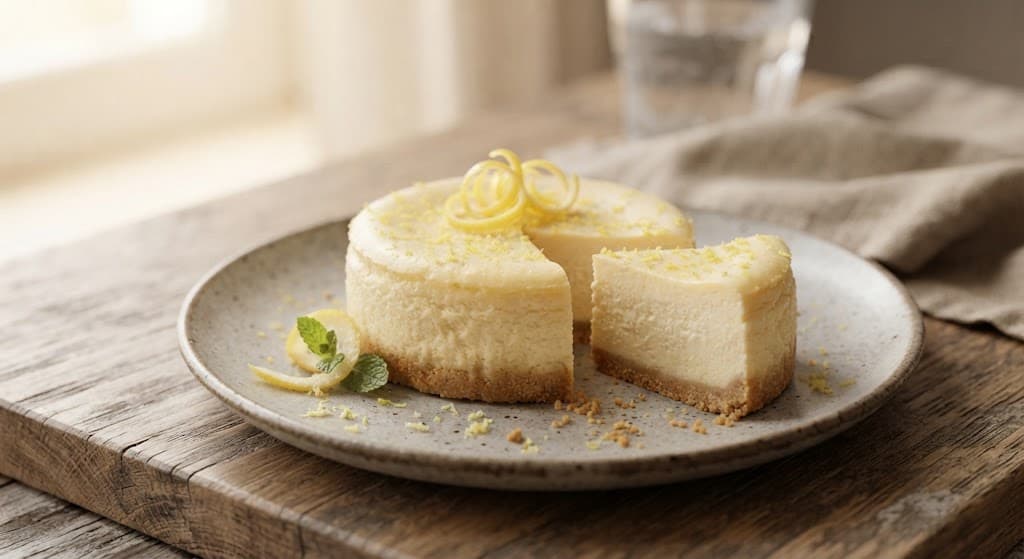
Lemon Cheesecake for One
By SVI SWEET
One small lemon cheesecake with a buttery biscuit crust, smooth creamy filling, and a fresh citrus finish — made just for one.
Servings
1 mini cheesecake
Prep
15 min
Cook
22–26 min
Total
2 hr 40 min
Difficulty
Easy
Calories
≈ 560 kcal
Protein
≈ 10 g
Fat
≈ 41 g
Carbs
≈ 38 g
Nutrition information is an estimate and may vary depending on the ingredients and brands used.
Ingredients
What you'll need.
- Plain digestive biscuits or graham crackers25 g
- Unsalted butter, melted10 g
- Cream cheese, softened75 g
- Granulated sugar18 g
- Egg yolk1
- Greek yogurt or sour cream15 g
- Fresh lemon juice10 g
- Finely grated lemon zest½ tsp
- Vanilla extract¼ tsp
- Fine saltTiny pinch
How to Make It
One lemon cheesecake, step by step.
Prepare the oven and ramekin
Heat the oven to 160°C (320°F). Lightly grease a small oven-safe ramekin or mini cheesecake mould about 8–10 cm (3–4 inches) wide.
Make the crust
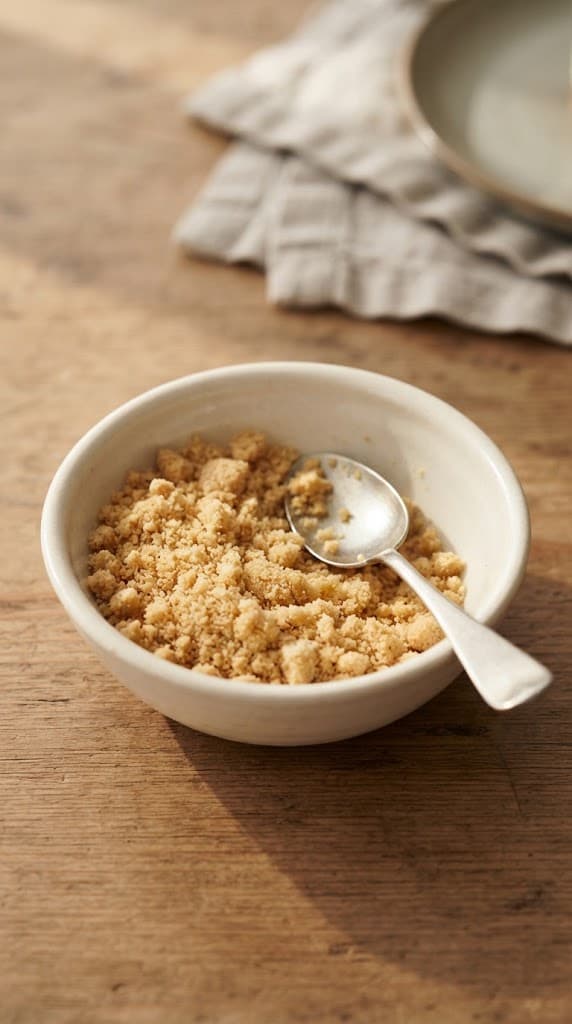
Crush the biscuits into fine crumbs and mix them with the melted butter until evenly moistened.
Pre-bake the base
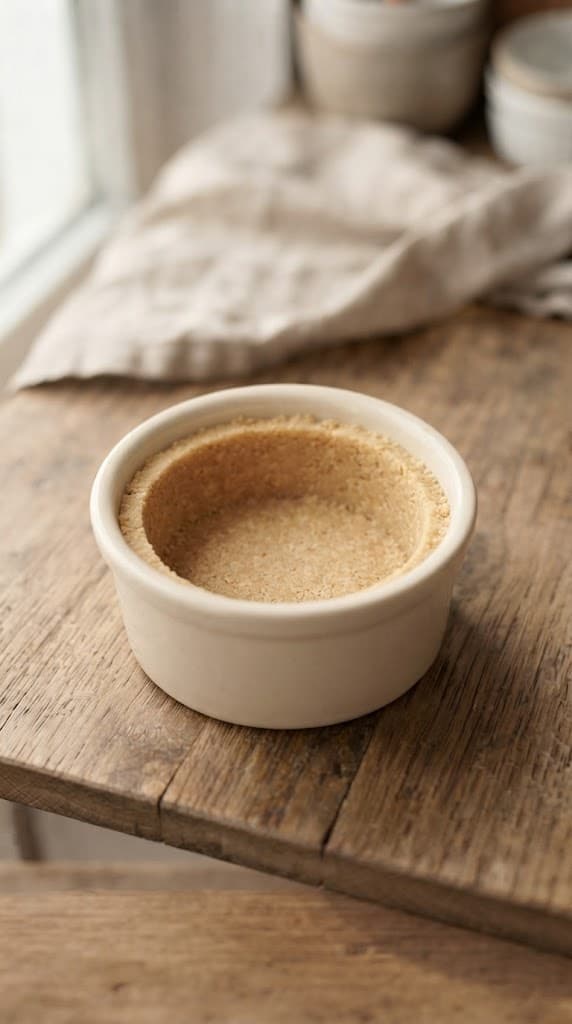
Press the crumb mixture firmly into the bottom of the ramekin. Bake for about 5 minutes, then remove from the oven and let it cool slightly.
Mix the cream cheese and sugar
Add the softened cream cheese and sugar to a small bowl. Mix gently until smooth and creamy.
Add the lemon filling ingredients
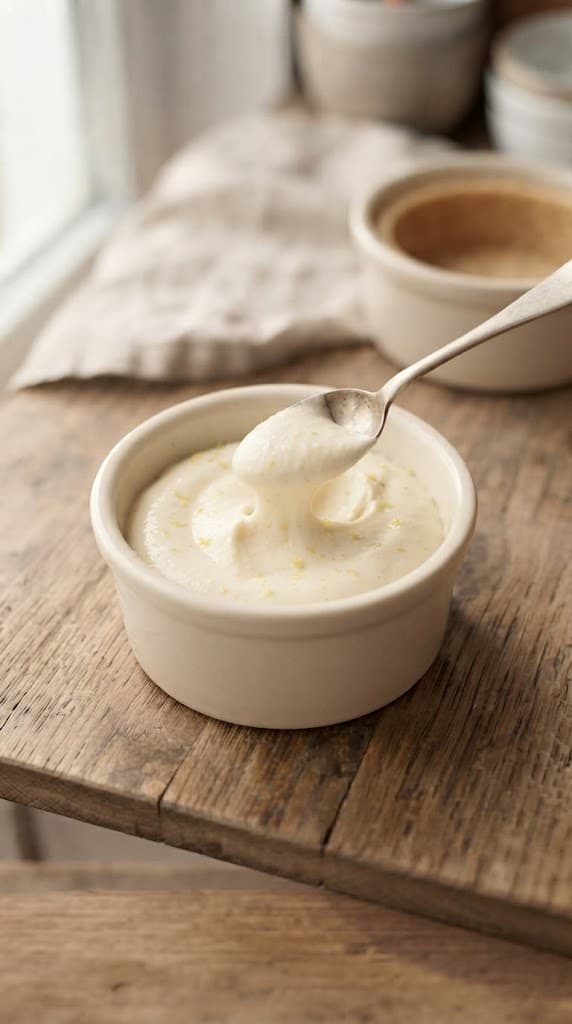
Add the egg yolk, Greek yogurt or sour cream, lemon juice, lemon zest, vanilla, and salt. Stir gently just until smooth and evenly combined.
Fill the ramekin
Pour the filling over the prepared biscuit crust and gently smooth the top.
Bake
Bake for 22–26 minutes, until the edges look set but the center still has a slight wobble when gently moved.
Cool and chill
Let the cheesecake cool to room temperature, then refrigerate for at least 1½ hours before serving so the filling can fully set.
Finish with lemon zest
Just before serving, add a very small amount of fresh lemon zest over the top for extra citrus aroma.
Step-by-Step
See how it comes together.
Step 2
Make the crust
Step 3
Pre-bake the base
Step 5
Add the lemon filling ingredients
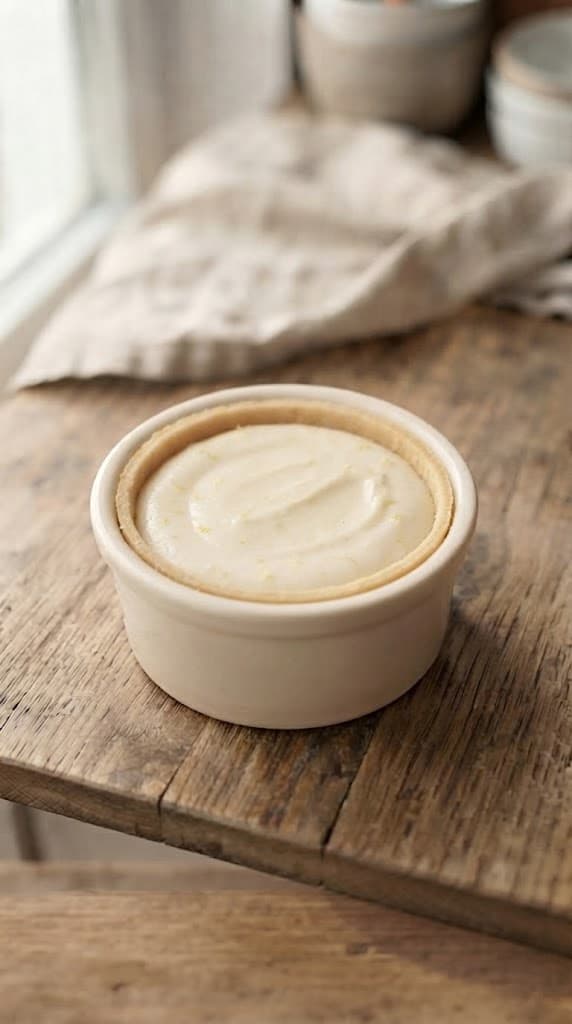
Step 6
Fill the ramekin
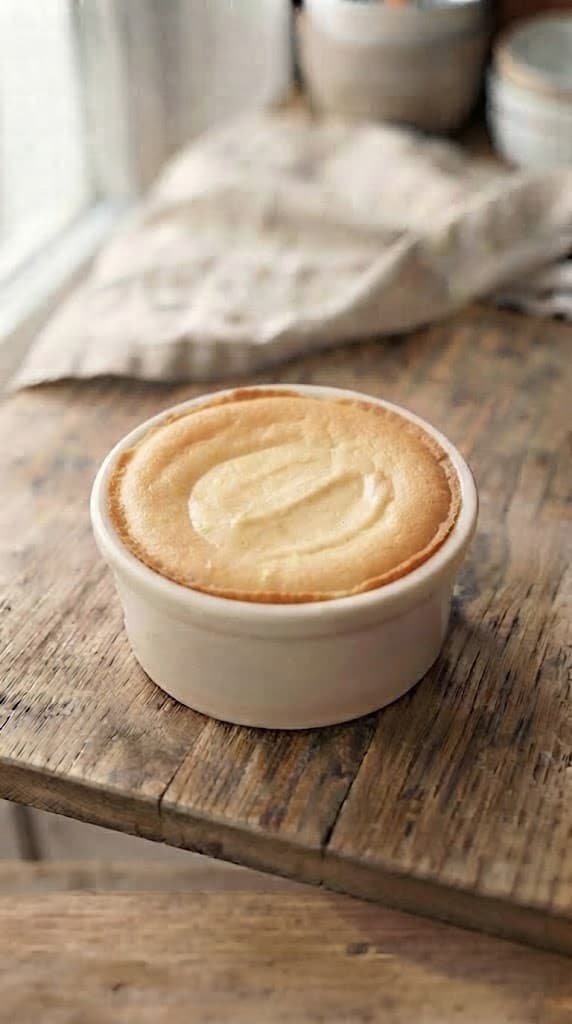
Step 7
Bake
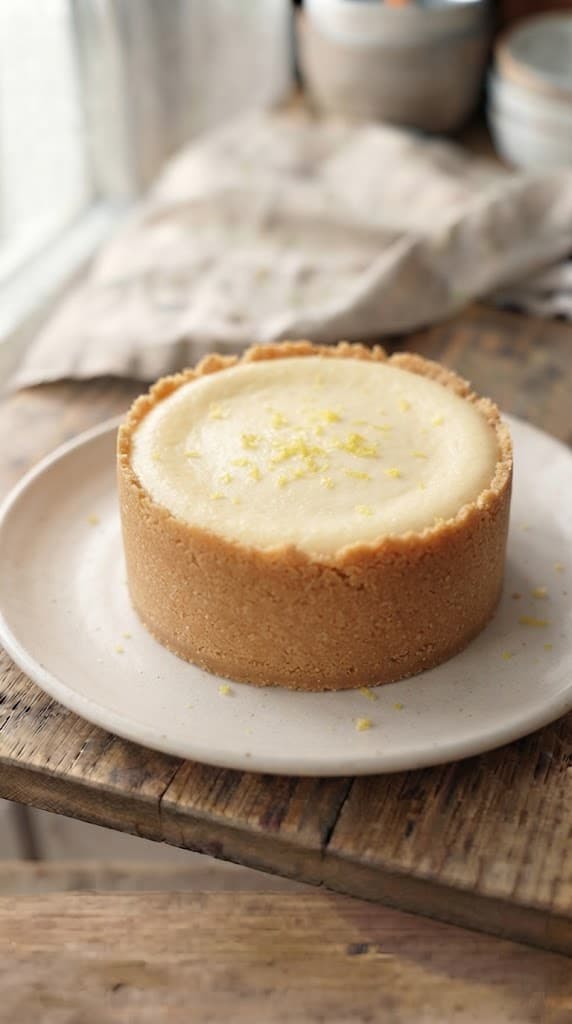
Step 9
Finish with lemon zest
Video
Watch the recipe.
SVI SWEET Tip
Use the zest as well as the juice.
Lemon juice adds acidity, but most of the fragrant citrus flavor comes from the zest. Using both gives the cheesecake a brighter lemon flavor without making the filling too wet.
Substitutions
Make it work with what you have.
Biscuit crust
Digestive biscuits, graham crackers, or another plain crisp biscuit can be used for the base.
Greek yogurt
Full-fat sour cream can replace Greek yogurt in the same quantity.
Lemon
Fresh lemon juice and zest give the best flavor. Bottled juice can work in a pinch, but the cheesecake will lose some of its fresh citrus aroma.
Crust-free option
You can omit the biscuit crust and bake the filling directly in a lightly greased ramekin for a simpler version.
Storage
Keep it cool and creamy.
Refrigerator
Keep the cheesecake covered in the refrigerator and enjoy it within 2 days.
Before serving
Serve chilled for the firmest texture, or let it sit at room temperature for about 10 minutes if you prefer a softer, creamier filling.
Freezing
The fully cooled cheesecake can be wrapped well and frozen for up to 1 month. Thaw overnight in the refrigerator before serving.
FAQ
A few helpful answers.
Can I use bottled lemon juice?
Yes, but fresh lemon juice tastes brighter. Fresh zest is especially useful because it provides most of the lemon aroma.
Why did my cheesecake crack?
Overmixing or overbaking can cause cracks. Mix the filling gently and remove the cheesecake while the center still has a slight wobble.
Do I need a water bath?
No. This small cheesecake bakes gently at a low temperature and does not require a water bath.
Can I make it the day before?
Yes. An overnight chill works very well and gives the cheesecake plenty of time to become firm and creamy.
Related Recipes
Something sweet to try next.
Single-Serve Cheesecake
A classic creamy baked cheesecake made in a small portion for one.
No-Bake Cheesecake for One
A creamy no-bake cheesecake with a buttery biscuit crust.
Chocolate Mousse for One
A smooth rich chocolate mousse made as an easy single-serving dessert.